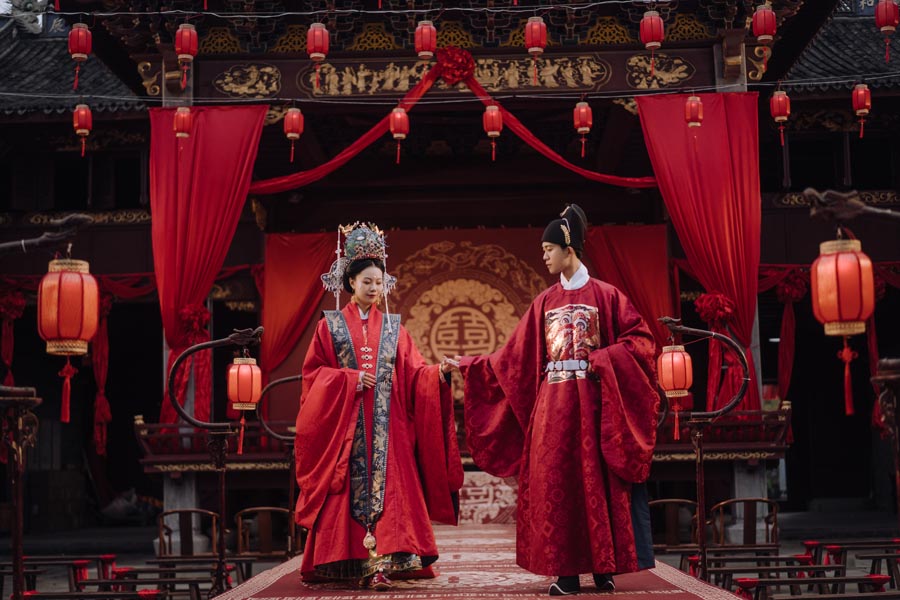
Traditional Chinese Wedding Ceremony
Overview
A traditional Chinese wedding ceremony is an elaborate and culturally rich event that embodies the essence of Chinese customs and traditions. It is a vibrant celebration that marks the union of two families rather than just the marriage of two individuals. The ceremony is steeped in symbolism, with each element representing good luck, prosperity, and happiness for the couple's future life together.
Key Elements of the Ceremony
Betrothal and Engagement
The traditional Chinese wedding ceremony begins long before the wedding day itself, with the betrothal process. This involves a series of formal meetings between the families of the engaged couple to discuss the marriage contract. The groom's family typically presents betrothal gifts, known as "pinli", which symbolize their commitment and respect towards the bride's family. These gifts often include items such as tea, wine, fruit, cakes, and money wrapped in red envelopes.
The Bride's Dress
A key feature of the traditional Chinese wedding ceremony is the attire worn by the bride and groom. The bride usually wears a red dress, adorned with intricate gold embroidery. Red is considered a lucky color in Chinese culture, symbolizing happiness and prosperity. The bride's headpiece often includes a phoenix crown, which is a symbol of grace and beauty.
The Groom's Dress
The groom typically wears a traditional Chinese suit, which may include a long robe with a jacket, often in red or black with gold embroidery. The choice of colors and designs reflects the groom's respect and intentions towards the marriage.
The Wedding Ceremony
On the day of the wedding, the ceremony typically begins with the groom and his party traveling to the bride's house to collect her, a process known as "接亲" (jiē qīn). This is often accompanied by lively music and firecrackers. The bride's family may playfully 'block' the groom's access to the bride, requiring him to perform certain tasks or offer red envelopes to bridesmaids before he can 'win' the bride.
Once the bride is collected, the couple travels to the groom's home or a designated venue for the formal wedding ceremony. This part of the ceremony involves several rituals, including the exchange of vows, the tea ceremony, and the offering of respects to Heaven and Earth, ancestors and the family elders.
The Tea Ceremony
The tea ceremony is a central component of the traditional Chinese wedding. During this ritual, the bride and groom offer tea to their parents and other family members as a sign of respect and gratitude. In return, the couple receives blessings and gifts, often in the form of red envelopes containing money or jewelry.
The Wedding Banquet
The wedding banquet is a lavish affair that typically concludes the day's celebrations. It is not just a feast but a social gathering where friends and family come together to celebrate the newlyweds. The banquet features an array of dishes, each with symbolic meanings related to good fortune, happiness and fertility. Speeches, toasts and entertainment such as traditional Chinese music and dance are common highlights of the wedding banquet.
Cultural Significance
The traditional Chinese wedding ceremony is more than just a union of two individuals; it is a celebration of cultural heritage and family values. The rituals and customs observed during the ceremony emphasize the importance of family, respect for elders, and the continuation of traditions. It is a reflection of the deep-rooted beliefs and customs that have been passed down through generations.
Modern Adaptations
While many Chinese couples still choose to incorporate traditional elements into their weddings, modern adaptations have also become popular. Some couples opt for a fusion of Western and Chinese wedding customs, blending traditional practices with contemporary themes and venues. Despite these changes, the core values and symbolism of the traditional Chinese wedding ceremony continue to hold significant meaning for many couples and their families. Article reference1. A historical event. chinadaily.com.cn. 20212. Traditional Chinese weddings back in vogue. chinadaily.com.cn. 2020Photo Gallery(7 pictures)CategoriesCultural HeritageTagIntangible Cultural HeritageTraditional CustomCatalogue1. Overview2. Key Elements of the Ceremony3. Cultural Significance4. Modern Adaptations- - - []








